


Greek Myths & Morals

Explore paintings, friezes and pottery to understand how the gods influenced everyday life and the beliefs of Athenian citizens. Pupils debate timeless morals and dilemmas, practice their persuasive skills and use interactive voting systems to experience democracy in action.

Aims (Skills, Knowledge, Activity, Result)

  •  To develop pupils’ skills to participate and communicate effectively
  • To explore how Greek gods/goddesses and myths influenced ancient Greek everyday life and political decisions
  • To create a fact filled sketchbook to aid decision making and as a record of the day
  • To stimulate pupils through debate to see different points of view of moral dilemmas and create persuasive arguments

What happens in a session?

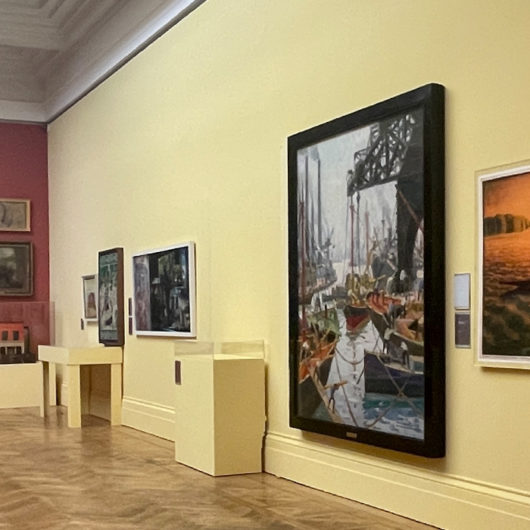
The pupils explore the gallery hunting for real ancient Greek artefacts and influences. Working in groups they learn about Greek gods and goddess and feedback to the rest of the class.

Using the myth of 'Prometheus and the gift of fire' pupils debate the rights and wrongs of a moral dilemma, as well as hearing the story behind the Olympic flame. They also examine superstition by looking at a painting of the Oracle.

Back in the education studio pupils try out three forms of voting, including two ancient Greek methods using jury voting tokens. For the third form of voting pupils debate the contemporary issue of the 'Parthenon Marbles' using interactive white board voting pods to vote in the style of an audience participation game show.

What teachers are saying about the session

“The discussion/ debates really got the pupils thinking and looking at issues from a different point of view.”

Year 6 teacher, Bolshaw Primary School

Preparation

Pupils would benefit from some prior knowledge of Ancient Greek lifestyle and myths. For more information including booking, parking, facilities and a downloadable risk assessment, please go to plan your visit.

NC related themes

History at key stages 1 and 2: Unit 14: Who were the ancient Greeks?

In this unit children find out about the way people lived in the ancient Greek empire. They use a range of archaeological and written sources, select and record information and interpret the past in different ways.

History at key stages 1 and 2: Unit 15: How do we use ancient Greek ideas today?

In this unit children use their own experience as a springboard to find out about the influence that the ancient Greeks continue to have on our lives.

Citizenship at key stages 1 and 2: Unit 01: Taking part - developing skills of communication and participation

This unit addresses children's participation in and contribution to school life. Its purpose is to develop children's skills to enable them to participate and communicate effectively in decision-making activities. The activities also build on the early learning goals. For example, within 'Communication, language and literacy', children interact with others, negotiating plans and activities and taking turns to speak.

Citizenship at key stages 1 and 2: Unit 02: Choices

In this unit, children discuss their likes and dislikes and the difference between right and wrong. They develop decision-making skills, explore the influences on the choices they make, and practise resisting peer influence. They consider rights and responsibilities when making decisions. The unit highlights the use of knowledge and skills to make informed and responsible personal choices and to consider the effect of those choices on other people and the environment.

Citizenship at key stages 1 and 2: Unit 08: How do rules and laws affect me?

In this unit, children learn about rules and how laws are made in a democracy. They develop their appreciation of why we need rules to protect rights and how they help us - at home, at school and in our wider communities. They take part in preparing and presenting arguments on topical issues.

Citizenship at key stages 1 and 2: Unit 10: Local democracy for young citizens

In this unit, children learn about their local community and the local council, and find out how local democracy works and how they can contribute. They explore what constitutes the local community, and discover some of the significant factors that have contributed to its development over time.

Calling All Teachers!

This is a new format that we are trialling for Pre-Visit notes. We would love to get your feedback. Did you find this useful or is there anything that you think is missing that should be there? Please contact us with your thoughts:

Email: mageducation@manchester.gov.uk